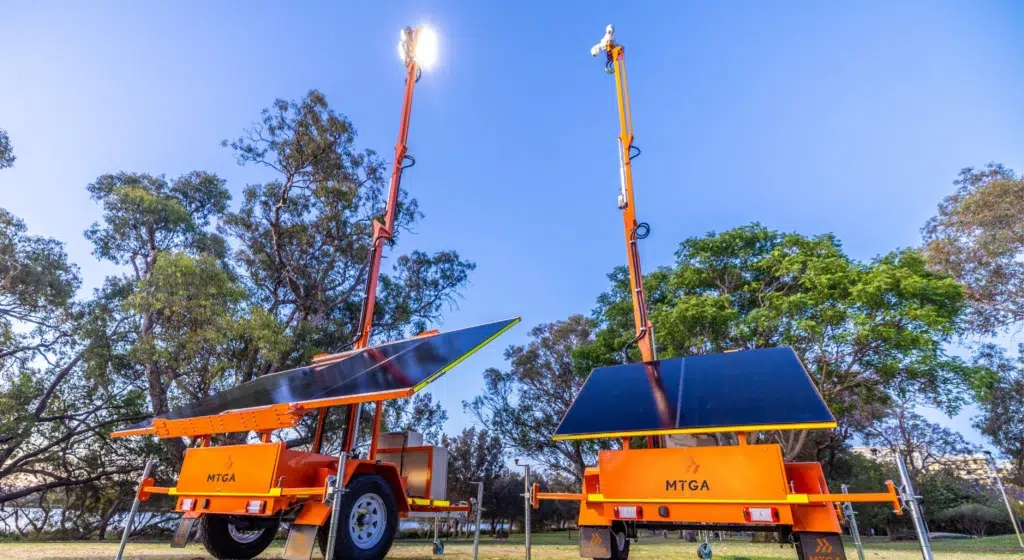
Lighting tower hire is usually the better call when the need is short, uncertain or changes from job to job, such as a shutdown, a trial deployment, a project running under about 12 months or a site working within a tight capital expenditure (CapEx) budget. Buying starts to pay off once you have the unit working on-site for around 60% of the working year or more, year after year.
The same logic applies if you’re also deciding on CCTV trailers or boom gates. In each case, the purchase price is only part of the cost, since ownership also entails paying for servicing, storage between jobs and transport to each site. If you’re deciding, let’s put the costs of the two side by side first.
Lighting Tower Hire vs Buying: How the Numbers Compare
Hiring and buying a lighting tower look very different on paper because one is paid month-to-month and the other is paid upfront. A new solar lighting tower in Australia typically costs between $15,000 and $45,000 excluding GST, depending on light output, mast height and battery capacity. Published hire rates for solar units, meanwhile, sit at around $1,000 to $1,700 a month excluding GST.
For a short job, hiring usually keeps costs down. But if a project runs longer than planned, you might want to consider owning.
| Duration | Hire (total paid) | Buy (purchase price) |
| 12 months | $12,000 to $20,400 | $15,000 to $45,000 |
| 24 months | $24,000 to $40,800 | $15,000 to $45,000 |
| 36 months | $36,000 to $61,200 | $15,000 to $45,000 |
*These figures are indicative market estimates based on published Australian supplier listings. They exclude GST and delivery, and actual costs vary by model, location and hire terms.
Comparing like-for-like units, the hire rate catches up with the purchase price somewhere between 15 and 26 months. Before that point, hiring costs less. After it, every extra month on hire adds to a bill that owning would have capped. Ownership costs then bring that point forward, which is why projects under about 12 months usually favour hire.
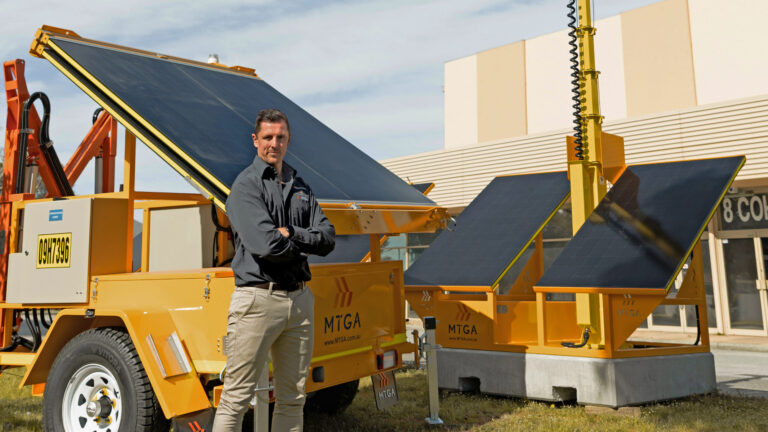
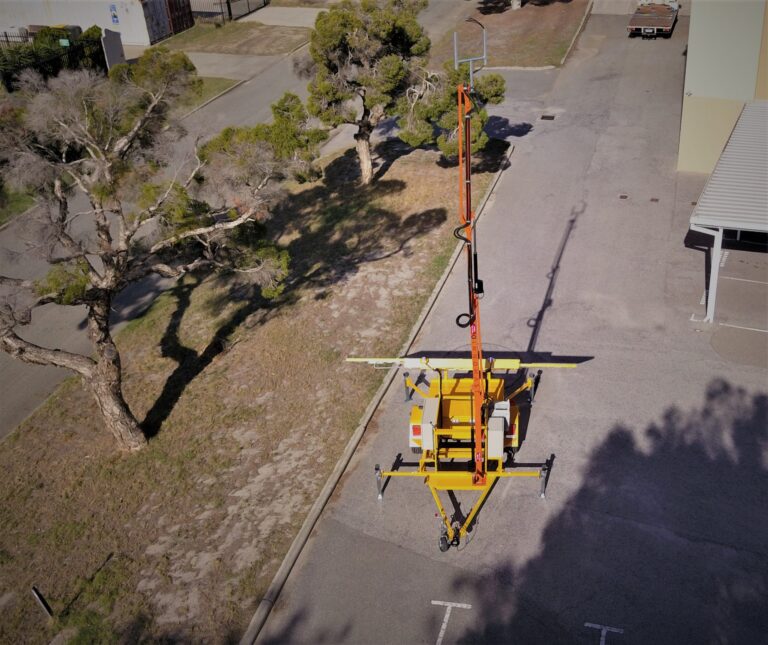
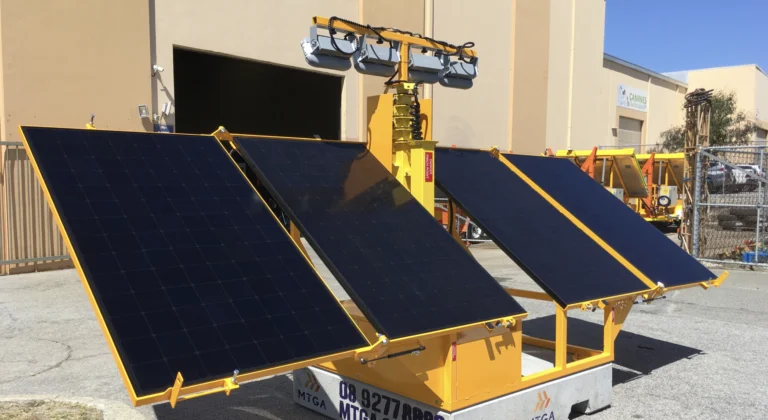
Where a project sits well past that point, the unit itself matters as much as the price, since it needs to keep working under varying site conditions over years. Our Omni lighting trailer is a solar lighting tower for sale, built for that kind of use, with up to 5 days of battery redundancy.
Total Cost of Ownership: What the Purchase Price Leaves Out
Total cost of ownership is everything a lighting tower costs across the years you own it. Most of those costs don’t show up on the purchase quote, because they become your responsibility once the unit is yours. Before you decide to buy, it helps to know what they are.
- Servicing and repairs. Batteries, LED modules and masts need regular checks and eventual replacement, along with someone qualified to do the work.
- Storage between jobs. A unit sitting in a yard still takes up space and earns nothing until its next deployment.
- Transport. Every move between sites means a vehicle, a driver and time taken away from other work.
- Insurance. Owned equipment needs cover on site, in storage and on the road between jobs.
- Depreciation and resale. A tower loses value every year, and what it’s worth at the end depends on its condition and use.
Depreciation does give something back at tax time. The Australian Taxation Office (ATO) lets businesses claim a unit’s decline in value over its effective life. The instant asset write-off usually won’t apply here, though. It lets small businesses with turnover under $10 million claim the full cost of assets under $20,000 in the year they buy them, but most new solar lighting towers are priced above that threshold, so the deduction is spread across several years instead.
If you plan to own a diesel tower, that adds another line to the budget. A diesel unit typically burns around 0.5 to 2 litres of fuel an hour, which means regular fuel runs and generator servicing on top of everything above.
When Hiring Is the Right Call
Hiring works best when the equipment only needs to be on site for a set window. Shutdowns and maintenance periods are the clearest example, since lighting is needed around the clock for a few weeks and then not at all. Seasonal work follows the same pattern, such as harvest on a large property, where demand peaks for part of the year and drops away for the rest. Hire is also a low-risk way to trial a unit on a real site before committing to buy one.
You will also need to consider budget timing. When mining CapEx is under pressure, hiring turns a capital purchase into an operating cost, so a project can get lighting on site without waiting for a purchase approval.
Remote, one-off deployments are another strong fit, especially when getting equipment to site is harder than running it. If you’re looking at equipment hire in Australia for any of these situations, our lighting tower hire is set up to cover them. Units are hired by the week, month or project, delivered anywhere in Australia ready to operate and maintained by MTGA for the length of the hire.
Secondary CTA: [See what’s available to hire]
When Buying Is the Right Call
Buying starts to make sense once a lighting tower stops being a temporary fix and becomes part of how a site runs. Permanent sites and multi-year projects are the clearest cases, since the unit is working most nights for years and hire costs would keep adding up well past the break-even point.
Ownership also suits businesses that move equipment between their own sites. The more often a unit is working rather than sitting idle, the less each job costs relative to the purchase price, which is why buying ends up cheaper than hiring over time. On top of that, the configuration is yours to change. On our Omni range, moving between models is a matter of attaching or detaching components, so a unit can adapt as a site’s needs grow.
For teams still weighing it up, our hire and purchase ranges use the same Australian-made equipment, so a trial hire is a real test of what you’d be buying. If owning looks like the better fit, our lighting range is available to purchase as well as hire.
Secondary CTA: [Request a purchase quote]
Security and Access Control: The Same Question for CCTV Trailers and Boom Gates
The hire or buy logic stays the same for security equipment, but the way sites use it is different. Surveillance often needs to follow the work, covering a laydown yard during construction, an entry point during a shutdown or a perimeter that shifts as a project moves.
When security only needs to stay in one place for a few weeks, or has to move with the work, site security camera hire usually costs less than owning cameras that sit idle between jobs. Equipment that moves often also needs to be quick to relocate and independent of site power.
Our solar CCTV trailer range and the compact Protect 1 are built for that kind of work, running on solar power with 4G connectivity and available through mobile CCTV hire. The Protect 1 can also be moved into position by forklift, which suits entry points and perimeters that change often.
The same goes for boom gates. A gate controlling access to a temporary work zone suits boom gate hire, since it only needs to stand for as long as the zone does. A gate on a haul road that will be in use for years is a different case, because the hire months keep adding up long after the break-even point.
Light and heavy vehicles also need different gates, so the choice depends on what’s passing through as much as how long the gate will stay. Our boom gate skids cover both, with light vehicle (LV) and heavy vehicle (HV) versions available to hire or buy.
Planning cameras and gates together also gets more out of both. Cameras can record each vehicle passing through a gate, for example, which turns two separate tools into one system for tracking CCTV, boom gates and remote monitoring across a site.
Hire or Buy? A Quick Decision Checklist
Before you decide, let’s run through a few questions. All you need to do is answer a simple yes or no.
- Will the equipment be needed for less than about 12 months?
- Will it be working for less than about 60% of the working year?
- Is capital approval difficult to get at the moment?
- Is there nowhere secure to store it between jobs?
- Would servicing it in-house be difficult to manage?
- Is the next job likely to need a different setup?
If your answers are mostly yes, hire is likely the better fit. If they’re mostly no, buying is worth costing out properly.
How Solar Changes the Hire or Buy Decision
With a diesel lighting tower, fuel is a cost that follows the unit everywhere. Hired or owned, someone still has to refuel it, service the generator and arrange fuel runs out to site. Those running costs stay high either way, making the hire-or-buy comparison harder to read.
Solar takes most of that out of the picture. Our solar lighting trailers run on solar panels and a lithium battery bank with up to five days of battery redundancy, so there’s no fuel to deliver and no generator to service on site. With running costs that low, the decision comes down to how long the equipment is needed and how often it will be working.
If you’re looking to cut back on diesel beyond lighting, our decarbonisation range includes battery-powered equipment such as wash down and power trailers that run without fuel.
Not Sure Whether to Hire or Buy?
Tell us about your site, how long you need the equipment and what it needs to do, and our team will work through the hire and purchase options with you. Enquire now
Frequently Asked Questions
How much does lighting tower hire cost in Australia?
Lighting tower hire cost in Australia varies by duration and location, but published rates for solar units sit at around $1,000 to $1,700 a month excluding GST. Longer hire terms usually work out cheaper per day than short ones. For an exact figure, suppliers quote based on your site, the unit and how long you need it.
Is it cheaper to hire or buy a lighting tower?
Hiring is usually cheaper for projects under about 12 months. On hire rates alone, hiring catches up with the purchase price somewhere between 15 and 26 months, and ownership costs like servicing and storage bring that point forward. Buying tends to win when a unit works around 60% of the working year or more.
How long can you hire a solar lighting tower for?
Hire periods vary by supplier. MTGA hires solar lighting towers by the week, month or project duration, with no fixed minimum hire period. Short hires suit shutdowns and seasonal work, while longer hires cover multi-month projects. Share your timeline with the team and the hire is structured around it.
Can you hire CCTV trailers and boom gates as well as lighting?
Yes. MTGA’s hire range includes Omni CCTV trailers, the compact Protect 1 surveillance unit and light and heavy vehicle boom gate skids, alongside its lighting and communications trailers. Multiple units of the same or different types can be hired for one site, all solar-powered and delivered ready to operate.
Does hire include delivery and maintenance?
It depends on the supplier, so it’s worth checking what a quote covers. With MTGA Hire, the hire cost includes equipment use, routine maintenance, delivery to sites anywhere in Australia and support from the MTGA team for the length of the hire. Any additional costs are confirmed before the hire begins.
Can I trial equipment through hire before buying?
Yes. MTGA’s hire range uses the same Australian-made, solar-powered equipment as its purchase range, so hiring a unit is a real test of how it performs on your site. If owning turns out to be the better fit, the MTGA team can talk you through the purchase options.