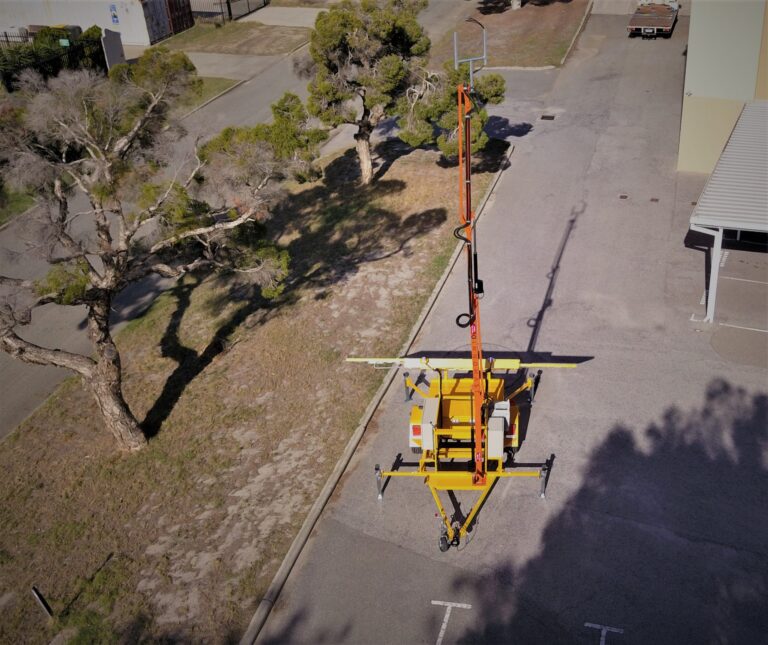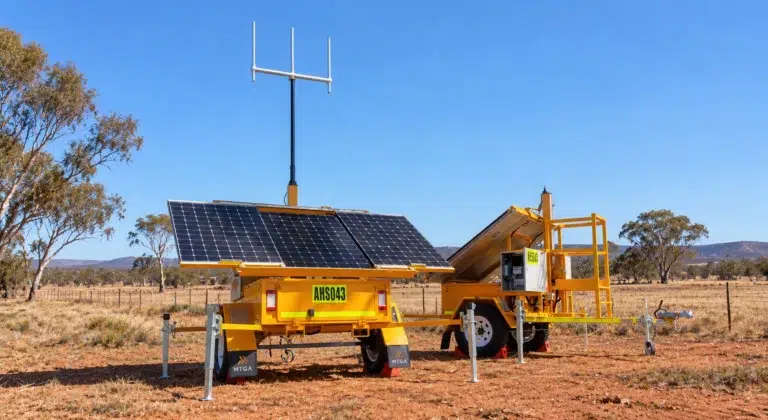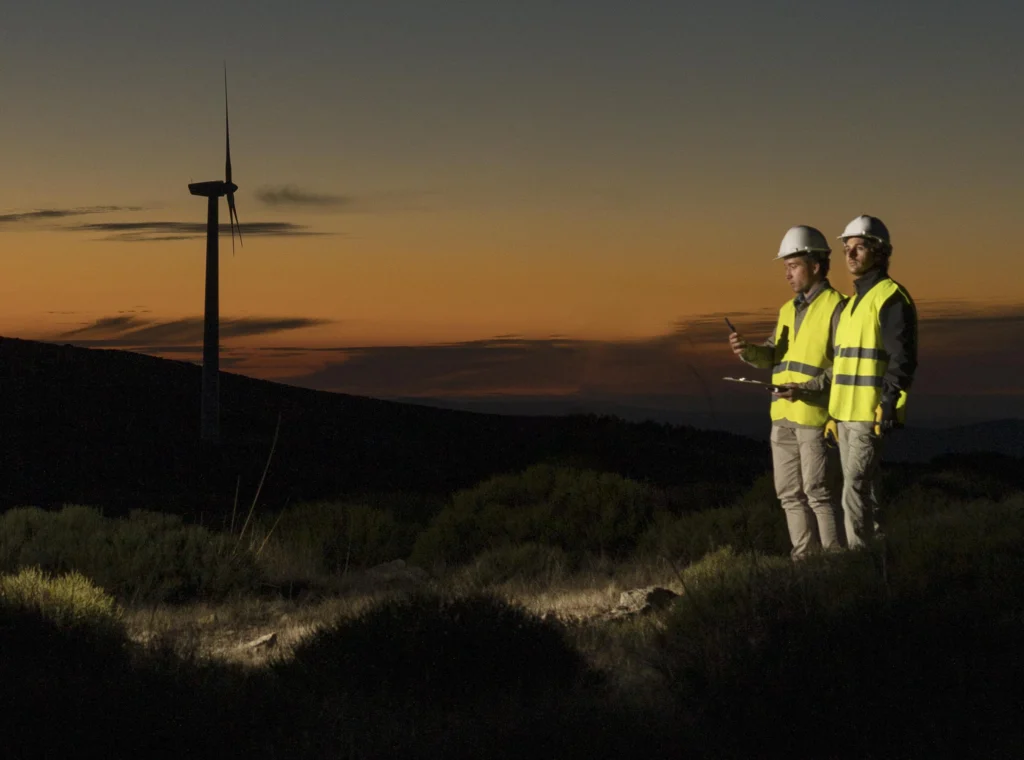
A mine spec lighting tower is a portable lighting unit built to meet the entry requirements of Australian mine sites, with the output, runtime and build quality to light a full night shift in remote, harsh conditions.
Lighting towers usually run on one of three power sources. A solar lighting tower relies on panels and battery storage; a hybrid light tower adds a diesel generator as a backup; and a diesel lighting tower runs on the generator alone. Each suits different sites, depending on fuel access, emissions targets and how often the tower can be serviced.
Choosing a mine spec lighting tower often comes down to how long it runs without sunlight, how much ground it actually lights, which power source suits the site, and how well it’s built for the conditions. Entry requirements tend to vary between operators, and a tower that doesn’t meet them can be turned away at the gate, so check your site’s rules first.
We’ll work through each of these and what figures you’ll need to keep in mind, starting with runtime.
Autonomy and Runtime: How Long Does It Need to Run Without Sunlight?
A solar lighting tower for a mine site should light a full night shift every night through winter, and keep running for several days if the sun doesn’t come out to recharge it.
Suppliers usually quote two figures for this, battery runtime and days of redundancy, and each measures something different.
Battery runtime is the total number of hours of light the batteries deliver with no solar input. Days of redundancy are the number of nights the tower keeps working through overcast weather, based on how long it runs each night. One is measured in hours, the other in nights.
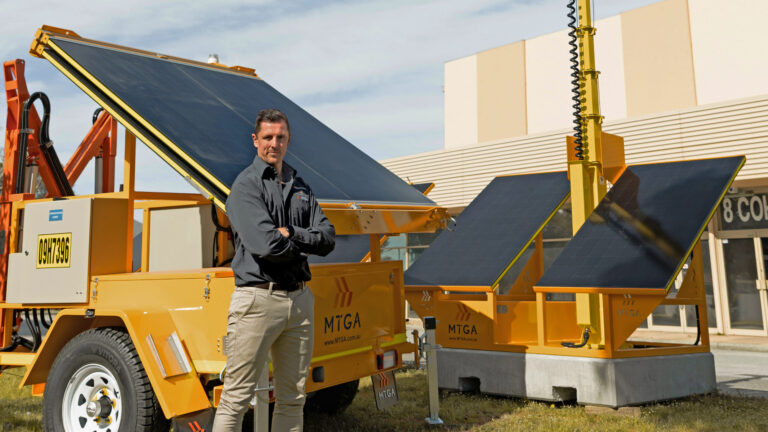
Take MTGA’s Omni 4, for example. It’s rated for 65 hours of battery runtime and up to five days of redundancy, running 12 to 14 hours a night through winter. At roughly 13 hours a night, 65 hours covers five nights of operation without any solar charge.
The more days of redundancy a tower has, the less often you’ll need to check on it. A tower with fewer days may need attention after a short run of overcast weather, and on a remote site, that means sending someone out to it.
When comparing towers, ask for both figures and the nightly hours behind them, and check they’re based on winter conditions, not summer.
Illumination Coverage: Lumens and Area, Not Just Watts
There’s no single lumen figure that suits every mine site. The output a tower needs depends on how large an area it has to light and how bright that area needs to be for the work happening in it. That’s why the coverage area at a stated lux level is a more reliable figure for comparison than lumens, and far more reliable than wattage, which only measures the power the lights draw.
As a rough guide, one lux equals one lumen per square metre. Dividing a tower’s lumen output by the lux a task needs gives the largest area it could light at that level. Say you have a 50,000-lumen tower working to a 40 lux target. That will top out at 1,250 square metres.
Real coverage is lower because mast height, lamp angle and beam spread determine how much light actually reaches the work area.
Lumen figures on spec sheets are best read as a ceiling rather than actual coverage. If you look at MTGA’s Omni 4 spec sheet, it lists up to 75,000 lumens, which is a useful starting point for comparison. That figure alone doesn’t show whether the light reaches the far edge of a laydown area at the level required by the task.
So, before choosing a tower, ask the supplier for the coverage area at the lux level your site requires and how it changes with mast height.
Solar, Hybrid or Diesel: Which Power Source Fits Your Site?
Solar suits most mine site lighting, particularly where towers stay in place for weeks at a time, and your site is working to cut fuel use, servicing or emissions. Hybrid and diesel towers are also good options when sunlight is limited or when a task requires maximum on-demand output.
| Solar | Hybrid | Diesel | |
| Power source | Solar panels and battery storage | Solar and battery, with a diesel generator as backup | Diesel generator |
| Refuelling | None | Occasionally, when the generator runs | Regular |
| Noise | Silent | Quiet on battery, louder when the generator runs | Constant engine noise |
| Onsite emissions | None | Reduced | Ongoing exhaust |
| Running costs | Lowest | Moderate | Highest |
| Weather dependence | Relies on solar recharge and battery storage | Generator covers long overcast periods | None |
| Best suited to | Long-term deployments with good sun exposure | Sites with unreliable sun or variable demand | Short-term, high-output tasks |
The biggest difference you’ll notice is in running costs. Diesel towers need regular refuelling and engine servicing, and on a remote site, each of those means a vehicle and a person travelling out to the tower. Solar removes both, which is where the savings add up over time, even though solar units can cost more upfront.
On Melbourne’s Cranbourne Line Upgrade, for instance, rail contractor McConnell Dowell replaced its diesel light towers with solar units and saved around 15,000 litres of diesel and about $20,000 in fuel and refuelling costs over a year.
Hybrid towers sit between solar and diesel. The generator only runs when the battery is low, which reduces fuel use compared with diesel, but you’re still carrying the cost of fuel, servicing and an engine on the tower.
Solar-only towers, like MTGA’s lighting range, handle low-sun periods by using more battery capacity rather than a generator. That makes days of battery redundancy the deciding factor in whether solar can keep up on sites with long overcast stretches.
Build Quality: What “Mine Spec” Means
A mine spec lighting tower is built to keep working through dust, heat, wind and rough ground without needing much attention. When you’re comparing builds, look at how the tower moves around the site, how its mast copes with wind, and how well its electrics are sealed.
Start with how you’ll move it. A towable trailer can follow the work behind a light vehicle, and if it travels on public roads, it must be ADR-compliant. A skid-mounted unit sits on a heavy base that holds steady in exposed spots, but you’ll need a forklift every time it moves. If your lighting needs shift as often as the work does, towable is usually the easier option.
Then check the wind ratings for both deployed and stowed conditions. The deployed rating indicates how much wind the tower can withstand with the mast up, effectively the point at which it has to come down. Meanwhile, the stowed rating tells you what it can handle once lowered. Put both next to your site’s typical conditions, and you’ll have a fair idea of how often high wind will take the tower out of action.
On a dusty site, sealing matters as much as anything on the spec sheet. IP66-rated enclosures keep out dust and powerful water jets, so the batteries and controller that run the tower stay protected.
Hire or Purchase?
Hire makes sense if you only need lighting towers for a short stretch, like a shutdown, a construction phase or seasonal work. You get on-site lighting quickly, without tying up capital.
For long-term projects or ongoing deployments, buying usually works out better, since hiring costs eventually add up to more than owning the towers outright.
Where the line falls depends on how long you’ll need the towers and who you want looking after them. Hire agreements often include servicing, while towers you own become part of your own maintenance schedule.
Both options are available on MTGA’s Omni lighting range, so you can buy outright or hire through MTGA Hire.
Frequently Asked Questions
What’s the difference between a mine spec and a standard lighting tower?
A mine spec lighting tower is built to meet a mine site’s entry requirements and keep working through dust, wind and rough ground with little attention. A standard tower may light an area just as well, but it isn’t necessarily built or fitted out for those conditions. Requirements vary between operators, so it’s worth checking the site’s rules before you choose.
How many lumens do I need for a mine site?
It depends on the size of the area and the lux level the work requires. Dividing a tower’s lumens by the target lux gives the largest area it could light, but real coverage is lower, so ask suppliers for coverage area at the lux your site needs.
Is solar reliable enough for continuous mine site operation?
Yes, provided the tower has enough battery capacity to ride out overcast periods. Check the days of redundancy, and make sure the runtime figures are based on winter conditions rather than summer.
How long do lighting towers run without sunlight?
It varies by model, so look for two figures, battery runtime in hours and days of redundancy in nights. MTGA’s Omni 4, for example, runs 12 to 14 hours a night on 65 hours of battery, which covers about five nights without any solar charge.
Do mine sites need hybrid or diesel backup, or is solar enough?
Solar is enough for most mine site lighting when the tower has good sun exposure and adequate battery redundancy. Hybrid or diesel towers suit sites with long stretches of limited sunlight, or tasks that need maximum output on demand.
What wind rating should a mine site lighting tower have?
There’s no single figure, since wind conditions vary between sites. Ask for both the deployed and stowed ratings and compare them against the site’s typical conditions. The deployed rating tells you when the mast needs to come down.