By the time a copper theft is discovered on a construction site, the damage is already done. Materials are gone. Wiring is cut, often torn out rather than unscrewed. Grounds are exposed. Whichever trade was going to pick up that scope on Monday is now waiting on a re-work quote instead. This isn’t some rare occurrence in Australia in 2026. It’s now a regular hazard.
The driving factor is the price of copper itself. According to a study by J.P. Morgan Global Research, the expected price peaks at nearly US$12,500 per tonne during Q2 2026 with a refined copper deficit of about 330,000 tonnes. As the value of any metal goes up, it is a fact that the temptation to steal increases as well. And now the impact is being felt in the sector, and the Housing Industry Association has spoken out on the matter.
For civil construction and infrastructure teams running remote, greenfield, long-corridor projects… Or really any site, the question is less about whether copper theft is a risk and more about what actually reduces it before the next weekend.
Why 2026 Is Different
Copper theft is not new. What has changed is scale, frequency and organisation.
The commodity price sits at a level that makes cable, offcuts, spools and even installed wiring worth the effort. HIA has publicly linked construction site theft to the insurance pressure now hitting builders, noting that its 2026 Small Business Conditions Survey identified insurance as the number one pain point for small building businesses nationally, with 72% of respondents naming it. Copper theft feeds directly into that number. Repeat losses drive claims. Claims drive premiums. Premiums flow into every project’s contingency line.
The recovery rates can be quite savage. It is common knowledge in the industry that about one in five pieces of large machinery that are stolen are actually recovered. This recovery rate is even lower for cable and materials. In reality, a theft event translates to total loss.
Where Construction Site Theft Concentrates
Not every project presents the same level of vulnerability. Theft of copper occurs under 3 circumstances:
- No existing power source, thus any alarm system, lighting, or surveillance relies on temporary power which may not yet have been brought in
- No after-hours staff, which usually means weekends, typically Friday nights through Mondays, go unmonitored
- Exposed material, in particular cable drums, temporary electrical lines, laydown areas, and switchgear being stored on-site
Remote and greenfield projects automatically satisfy all three. Linear infrastructure projects, such as highways, pipelines, and utility systems, magnify the threat over kilometres of frontage. Changing perimeter urban compounds present a slightly modified threat since an always moving perimeter is hard to secure. The effect is a time gap in which the value of the project exceeds its physical security infrastructure.
The Real Cost of a Copper Theft Incident
The stolen material is almost never the highest value item on the invoice. An average case involves a stack of expenses:
- Replacing the copper itself, priced in 2026 dollars
- Damage to conduit, switchboards, drywall, or concrete slabs due to wire theft
- Re-working by the impacted trade, followed by any dependent downstream trades
- Schedule delay, often compounding down-stream deliverables
- Deductible and increasing insurance premiums
- Safety protocols and inductions before restarting construction
None of that is unique to copper. What makes copper theft distinct is how routinely and quickly it happens on the kind of sites civil construction runs.
How to prevent copper theft on site
Copper theft prevention is multi-layered. Not a single measure prevents an individual who is determined. Deterrents will make one place difficult to deal with than the other place along the street.
Three elements do most of the work.
Lighting
Well-lit sites are a poor target. Offenders prefer to work unseen, and a fully lit perimeter and laydown area removes that condition. Solar lighting also means the deterrent does not depend on grid power that is not there yet. For a broader look at how lighting fits into a site’s overall setup, our guide to solar lighting trailers walks through the specifics.
Construction site CCTV
Actively recording and preferably visible, construction site security cameras do two things at once. They create a real risk of identification for anyone entering the site, and they provide usable evidence when an incident does occur. On sites with no permanent power, solar-powered, 4G-connected units are the practical answer. Our Site Safety 101 guide covers how CCTV, access control and monitoring layer together in more detail.
Access and perimeter security
Controlling site access and ensuring that key areas such as cable storage, access points and switch gear preparation areas are monitored will prevent any exposed material from becoming accessible for any opportunist.
Australian police advice on construction site robbery also comes down to basically the same core issues: minimising the opportunity, making the site more visible, and letting the offenders know the site is being observed.
Remote Site Security When There’s No Power or After-Hours Staff
The awkward part of remote site security is that the sites most at risk are also the ones least equipped to protect themselves conventionally. No grid power. No fixed cameras. No overnight crew.
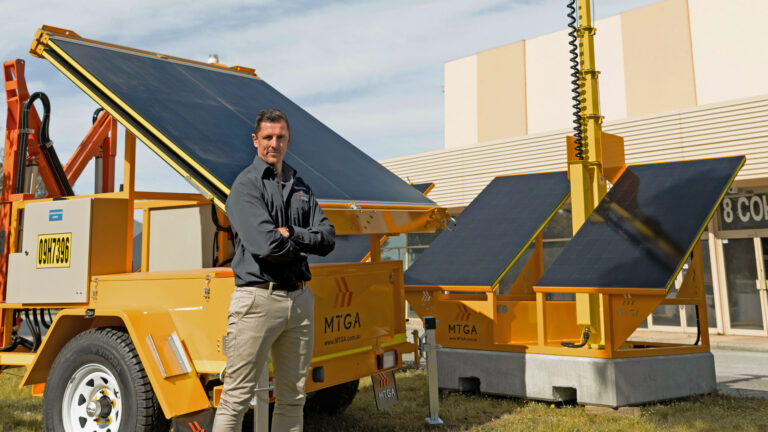
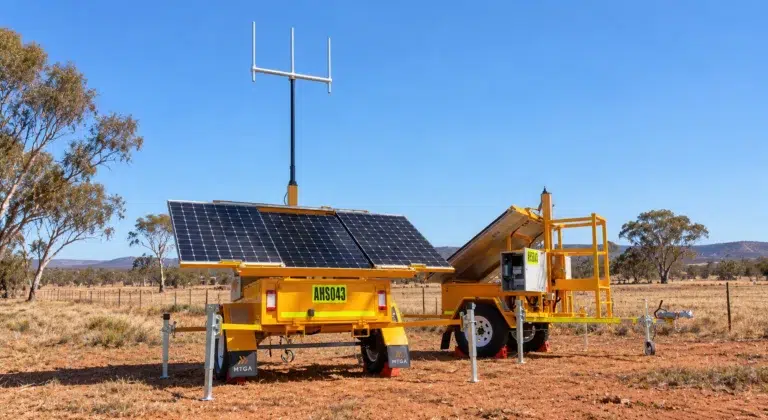
MTGA’s security solutions and lighting range are built around exactly that gap. Three products carry most of the load on a typical civil site.
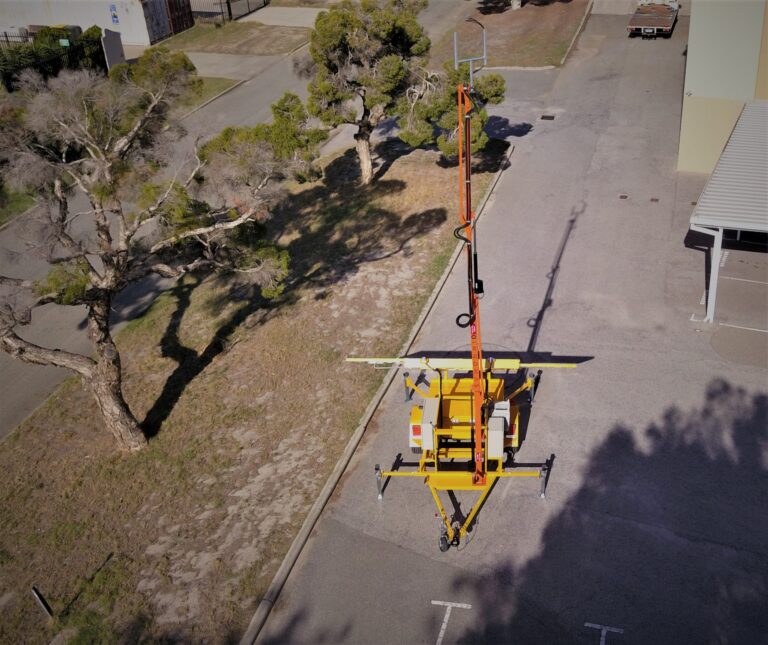
Omni Lighting Trailers, Lux 2 and Lux 4 provide solar-powered LED site lighting that deploys in minutes, runs dusk to dawn without a generator, and turns a dark site into a poor target. Rapid deployment matters here, because greenfield sites often need light on day one, not on week three when the grid connection is finally in.
Omni CCTV Trailers provide solar-powered, 4G-connected surveillance that records continuously and relocates as the site progresses. For sites where the layout and access points keep changing, and for the Friday-night-to-Monday-morning window when most incidents happen, this is eyes on site without a security guard on payroll.
Protect 1 is a forklift-deployable security tower with a 48-hour battery, designed for fixed perimeter positions, entry points and copper or cable storage areas. Where the exposure is concentrated at a known point, this is a dedicated eye on that point.
None of these requires a grid connection, permanent installation or a specialist crew. They are engineered to be positioned, switched on and left to do their job.
How to Prevent Copper Theft Before the Next Weekend
The solution to the problem of how to stop copper thieves from operating on-site is time itself. Prevention that comes too late is not as valuable as the same process which was implemented a week sooner. Since these devices operate using solar energy and are towed or forklifted onto site, their implementation is a question of hours, not weeks. There is no need to wait for the temporary power lines to be set up, no need to wait for the installation crew, or for the utilities to come online.
For projects still weeks away from a permanent security setup, that coverage gap is where most losses land. Effective remote site security is measured by how quickly you can close it.
Talk to MTGA About Protecting Your Site
If copper theft is already on your risk register, or if your next project runs in remote, greenfield or no-power conditions, MTGA can put together a package of solar lighting and off-grid security tailored to the site. Deployment is measured in hours, not weeks.
Request a quote or explore MTGA’s civil construction industry solutions.
Frequently Asked Questions
How much is copper theft costing the Australian construction sector?
Copper theft has been described by the HIA as crippling parts of the construction sector, feeding into rising insurance costs, materials loss, project delay and repair overheads. HIA’s 2026 Small Business Conditions Survey identified insurance as the number one pain point for small builders nationally, and copper and site theft are a direct contributor to that pressure.
Why are construction sites targeted for copper?
The reasons why construction sites become targets for stealing copper are: firstly, copper scrap has high market value; secondly, copper is easily available on such sites as scrap wire. In 2026, copper prices reached the level that even small amounts became valuable. Sites that lack permanent electricity and after-hours security become vulnerable.
When does most copper theft happen?
This occurs mostly at night and especially during weekends and holidays when there is no one around. This is the case for most construction projects.
Do solar lights and construction site CCTV actually deter copper theft?
Yes, but used in tandem. The presence of good lighting eliminates the cover that criminals use to hide. The presence of visible and recording cameras for security increases the probability of being caught. The combination reduces the value of the opportunity that exists in the location. There is no way of eliminating all risk, but using multiple deterrents makes the job more difficult.
How do you secure a site with no power or after-hours staff?
Solar-powered lighting and 4G-connected security cameras, deployed at the perimeter and at high-value points such as cable storage, cover the coverage gap. Because they do not require a grid connection or a dedicated install crew, they can be operational within hours of arriving on site. This is the practical model for greenfield, remote and linear projects where permanent infrastructure is not yet available