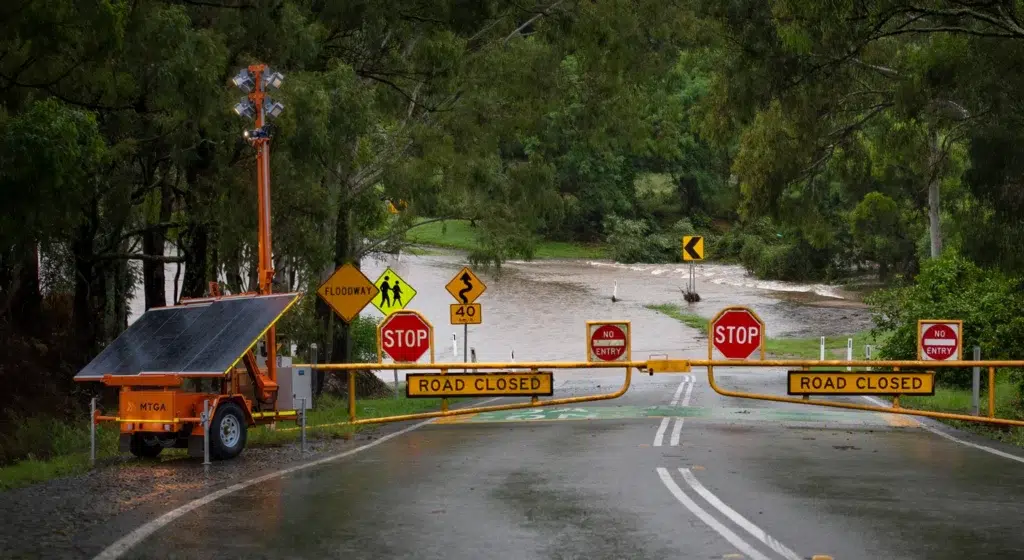
Bushfire, flood and severe storm season in Australia is not a possibility to plan around, it is a schedule and in most emergencies, the first thing to go is not the fence line or the road. It is power and with it, communications. An emergency communications trailer, alongside deployable lighting and off-grid power, is often what keeps a response operational after the local grid and mobile network have dropped out.
This is a plain look at what a rapid-deployment fleet actually covers, how fast it goes live, how it holds up in smoke and extreme weather and how emergency services, councils and utilities are using this kind of disaster response equipment across Australia.
Why Power and Communications Fail First in an Australian Emergency
The 2019-20 bushfire season made this specific point in a very hard way. The Royal Commission into National Natural Disaster Arrangements documented cascading failures across essential services, these included power outages, which knocked out mobile phone coverage, telecommunications outages which disabled EFTPOS and ATMs and communities lost the ability to receive warnings or coordinate evacuations, in some cases before the fire itself had reached them.
The pattern to these unfortunate yet expected fire events is that distribution lines are cut, the closest cell tower drops its backhaul connection (and in many cases) loses power to its backup generator. All radio repeaters shut down. And fuel service stations lose their ability to process payments.
For emergency services and councils, this is why bushfire and flood response equipment now has to include the power and communications layer, not just physical response. If the comms fail, everything else that depends on comms fails with them.
What Is an Emergency Communications Trailer?
An emergency communications trailer is a self-contained, off-grid unit that carries the connectivity, power and control equipment needed to run a command post, evacuation centre or coordination point where fixed infrastructure is unavailable or has failed.
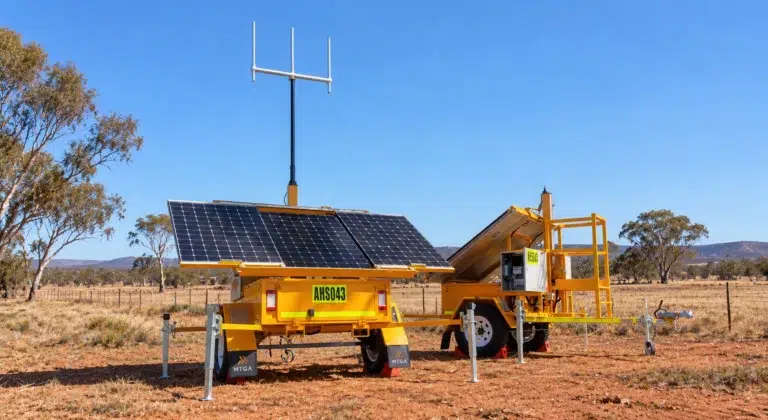
Typically it includes a solar and battery power system, radio and cellular equipment, satellite backhaul options and remote configuration. Deployed at an evacuation centre, an incident control point or a staging area, it becomes the connectivity backbone the operation runs on.
The point of the trailer format is speed. A unit that has to be trucked in, unpacked, wired up and commissioned is not a rapid-deployment asset. A trailer that is towed to the site, levelled, raised and switched on inside an hour is.
One Deployable Fleet Covering Lighting, Power, Communications and Security
In a real emergency response, no single trailer is the answer. What matters is having a complete fleet to meet a range of needs and how quickly the pieces can be positioned together.
Solar Lighting Towers for Evacuation Centres and Night Operations
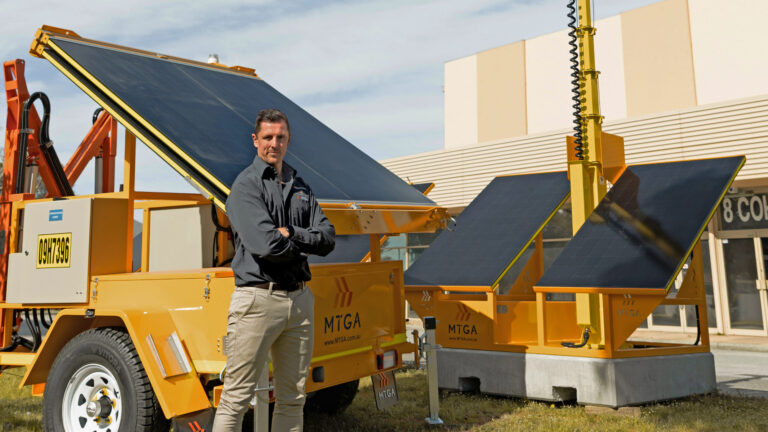
Mobile lighting tower emergency deployments cover the same list every time. Lighting for evacuation centres, staging areas, sandbagging operations, roadwork rerouting after damage and night-time search or recovery. MTGA’s solar lighting trailers handle this end of the fleet.
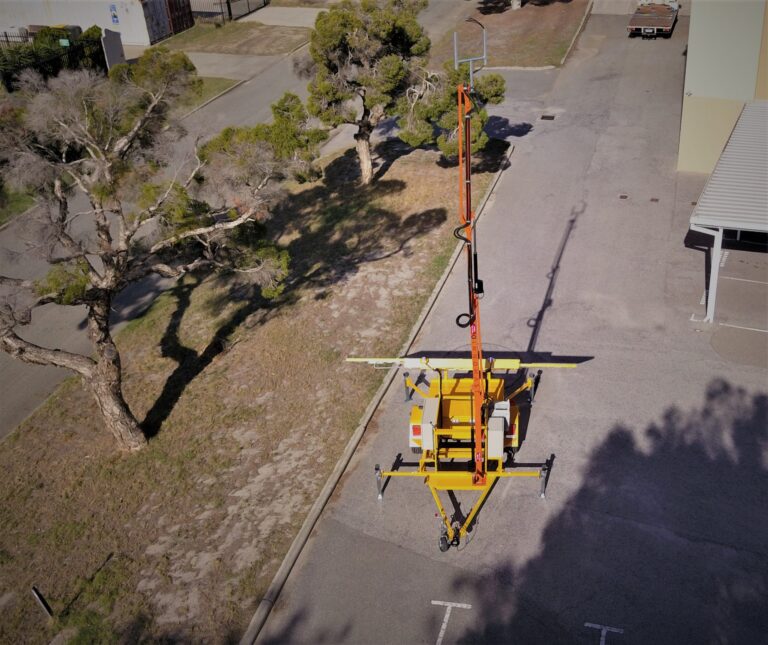
Our Omni Lighting range runs up to 75,000 lumens on an 8m electric mast, ADR-compliant for towing behind a light vehicle for easy transportation and can run up to 12-14 hours a day with up to five days of battery redundancy. The Lux 4 is another great option that is a forklift-deployable tower for staging areas, delivering up to 80,000 lumens with a 14-hour daily duty cycle and 45-hour battery runtime.
Both are solar-first, with no generator and no fuel to schedule.
Communications Skids, Trailers and Masts
The connectivity side of the fleet spans mobile communications trailers, base station skids and communications masts. Where the local network is down or was never there, MTGA’s Omni communications trailers support LEO satellite backhaul, which means rapid-deployment communications can be established in areas without any terrestrial cellular coverage.
For a deeper look at how satellite links change what’s possible in remote comms, see our guide to LEO satellite communications, which covers the same underlying capability applied to remote mining sites.
Units support integration with self-healing wireless mesh systems, so multiple deployed trailers can link to form a temporary local network across a response zone.
Battery Power Trailers and Off-Grid Power
Portable power for emergencies is the layer underneath the whole fleet. Radios, repeaters, comms, lighting and any auxiliary equipment on site need to keep running for the duration.
MTGA’s Battery Power Trailers, part of the Decarbonisation Range, provide standalone off-grid power sized for the load. Solar-charged and battery-buffered, they replace the diesel generator that would otherwise sit humming outside an evacuation centre for a week.
CCTV and Surveillance for Evacuation Zones
CCTV and surveillance should be provided around evacuation locations (including, but not limited to, evacuation centres, recovery zones and supply depots), especially at night. When there are high value items (e.g. as defined by an insurer) or there are restricted areas in these zones, it will also be important to have eyes on these zones during this time.
VMS and Access Control for Road Closures and Checkpoints
Public messaging and road control play a big part in the same response, particularly for communicating fast-changing safety instructions. Ruggedised VMS trailers handle evacuation routing, road closures and hazard messaging. Boom gate skids control access at restricted zones, staging compounds and checkpoint positions.
How Fast Can It Deploy and How Long Does It Run?
The specification that matters to a response coordinator is time to operational. On the MTGA fleet:
- Lighting: Omni units tow behind a light vehicle and deploy in minutes. Lux 4 moves by 2.5T forklift and sets up with a single person.
- Communications: Omni comms trailers tow anywhere a light vehicle can reach and go live once positioned and powered.
- VMS: One-person deployment with an electric height actuator and jackleg stabilisers.
- Runtime: Battery redundancy on the lighting and comms platforms sits at 4 to 5 days, with solar recharging through the deployment.
Across this fleet we have kept the key design point of being towable or forklift-deployable, no grid connection, no generator fuel, operational the same day, for around-the-clock use.
Do Solar Trailers Work in Bushfire Smoke and Extreme Conditions?
Straight answer: heavy smoke reduces solar output. Dense smoke can drop PV performance for days at a time and prolonged cloud cover has a similar effect.
That is why fleets are built around battery redundancy rather than daily solar dependence. Four to five days of storage on the lighting and comms platforms means the unit keeps running through a smoke-affected week and continues to trickle-charge at reduced output when direct sunlight is diminished.
Where a response is expected to run beyond the redundancy window, hybrid options and battery power trailer support extend the operating envelope.
Hire or Buy for Emergency and Disaster Response
A combination of “hire” and “buy” will be the best solution for the majority of emergency response/disaster response agencies. Most agencies will have their own fleet that serves as a base-line capability; they can then increase their capabilities with hired equipment during peak seasons (e.g. fire season) or large-scale events.
“Hire” works well for pre-season staging, for event-specific support, and for multi-agency sharing. There is an excellent example in Australia of how this could be applied to local government/municipalities through the NSW connectivity trailer model. This model has trailers located throughout the state. When a unit needs to be moved from one location to another it is done so by drawing off one of these trailers.
MTGA’s hire range covers communications trailers, lighting trailers, CCTV trailers, boom gate skids and security systems, all available for short-term deployment.
Standards, Safety and Interoperability
Portable VMS deployed for road closures and evacuation messaging is covered by AS 4852.2:2019. Electrical safety across the fleet follows the applicable Australian standards for portable power and lighting systems.
Interoperability is the harder question. Multi-agency responses often involve fire services, SES, police, councils, utilities and defence support in the same operating picture. Comms platforms that support mesh networking, standard IP infrastructure and satellite backhaul give agencies more options for staying connected across jurisdictional and equipment boundaries.
Who Uses Rapid-Deployment Equipment in Australia
The list of agencies deploying this class of emergency communications trailer and rapid-deployment support equipment covers most of the response chain:
- State Emergency Services (SES) across each state and territory
- Rural fire services and metropolitan fire services
- Local councils, particularly in bushfire and flood-prone LGAs
- Water, electricity and telecommunications utilities restoring service in affected areas
- Defence and ADF support during Defence Assistance to the Civil Community (DACC) requests
- Recovery agencies and disaster recovery centres
The equipment sits across the same industries MTGA supplies routinely: telecommunications, defence, civil construction and agriculture, which is why the same platforms adapt into emergency response without requiring a specialised parallel fleet.
Talk to MTGA About Emergency Communications Trailers and Rapid Response Equipment
If you are staging equipment ahead of the season, planning surge capacity for a specific event, or building out an owned or hired fleet, MTGA can put together a package of lighting, power, communications and security tailored to the deployment.
Request a quote or explore MTGA’s hire range for short-term deployment.
Frequently Asked Questions
What is an emergency communications trailer?
An emergency communications trailer is a self-contained, off-grid unit that provides connectivity, power and control equipment for a command post, evacuation centre or coordination point where fixed infrastructure is unavailable or has failed. It typically includes solar and battery power, radio and cellular equipment, satellite backhaul and remote configuration.
How quickly can an emergency communications trailer be deployed?
A well-designed unit is towable by a light vehicle, sets up with one person and can be operational within an hour of arriving on site. There is no grid connection, no generator fuel and no specialist installation required.
What power source do rapid-deployment trailers use in off-grid disaster zones?
Solar-charged lithium battery systems. MTGA’s fleet uses 400W-plus solar panels with 7 to 20-plus kWh of battery storage, providing four to five days of battery redundancy with solar recharging through the deployment. Diesel generator support is available for extended-duration or hybrid deployments where needed.
Do solar lighting and communications trailers still work in heavy bushfire smoke or extended cloud cover?
They still do but their performance is dependent upon the amount of stored energy as opposed to real time solar generation. As a result dense smoke and extended cloud cover will both greatly impede solar inputs thus many quality units have been specified to include battery backup redundant power systems for at least 4-5 days. The primary reason these units can be used for extended periods (beyond this 4-5 day period) is through using either hybrid configurations or by supporting them via additional batteries.
How do communications trailers stay connected when local mobile networks are down?
LEO Satellite Services are the most common method utilised for providing connectivity independent from terrestrial cellular infrastructure. Most communication trailers can also be configured to support mesh networking; allowing two or more communication trailers that are deployed within the same area to create a temporary local network.
Can emergency services and councils hire lighting, power and communications trailers instead of buying them?
Yes. For example, hire may be the best way to obtain these items if you need them for the preseason to assist in supporting your events or if you require supplemental support for short-term needs such as during an ongoing response. Many agencies use a combination of both purchased and rented assets to achieve their objectives. A minimal number of vehicles are purchased to serve as the base level of capability while rental equipment provides the ability to increase capabilities as necessary.
Which agencies use rapid-deployment lighting, power and communications equipment in Australia?
SES units, rural and metropolitan fire services, local councils, water and electricity utilities, telecommunications providers, defence and ADF support during DACC requests and recovery agencies operating disaster recovery centres.
What is the difference between an emergency communications trailer and a mobile command centre?
A mobile command centre is typically a purpose-built vehicle with integrated workspaces, briefing areas and multiple communications systems, designed to house command staff during a response. An emergency communications trailer is a smaller, deployable connectivity and power asset that provides the underlying infrastructure a command centre, evacuation site or coordination point depends on. Many operations deploy both together.
What Australian standards apply to portable emergency lighting and signage?
Portable variable message signs used for road closures and evacuation messaging are covered by AS 4852.2:2019. Electrical safety across portable lighting, power and communications systems follows the applicable Australian standards for the equipment class.